
The science behind acoustics
Understanding the principles of acoustics and room acoustics is essential when it comes to creating comfortable and functional spaces. Whether you’re an architect, interior designer, musician, or simply someone interested in improving the acoustic environment, this segment will provide you with valuable insights.
Room acoustics plays a crucial role in how sound behaves within a given space. It encompasses the way sound waves interact with various surfaces, resulting in reflections, diffusions, and absorption. Achieving the right balance is crucial for optimal sound quality, speech intelligibility, and overall comfort.
One of the key parameters in building acoustics is the Sound Reduction Index (SRI). The SRI measures the effectiveness of a partition or building element in reducing sound transmission between spaces. It quantifies the reduction in sound level when sound waves pass through a separating element, such as walls, floors, or doors. By understanding the SRI, you can select the appropriate materials and designs to create soundproof environments or minimize unwanted noise.
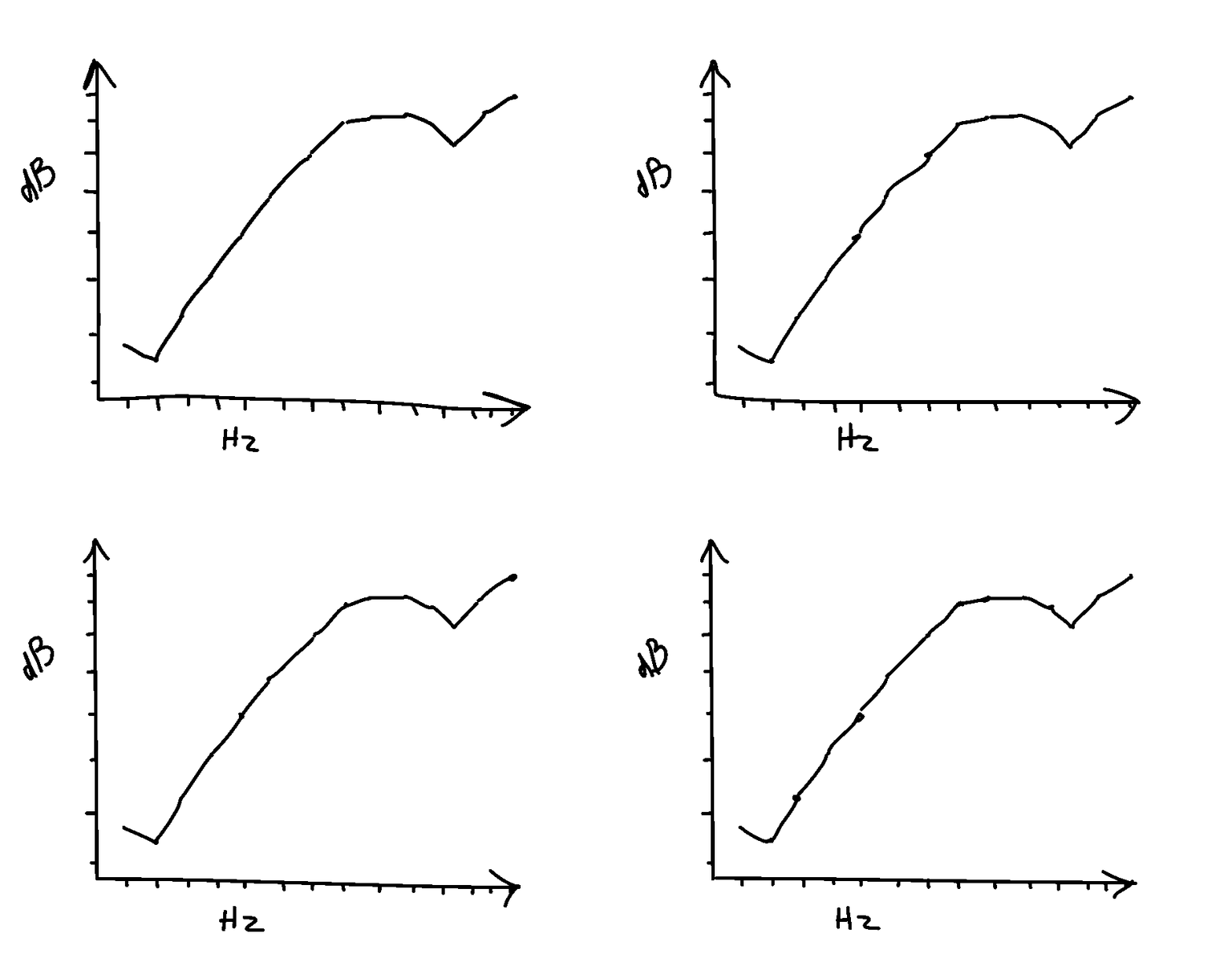
The Sound Reduction Index (SRI) quantifies the sound reduction capabilities of seperation in question.
Often the Sound Reduction Index is given in R’w with dB unit. Typical values of dry-leaf (plasterboard and the likes) have values of around 40-60 dB. Higher values can be achieved, but requires comprehensive design and construction.
Another important aspect is the absorption coefficient. This coefficient represents the ability of a material to absorb sound energy. It measures the percentage of sound energy absorbed by a material compared to the total sound energy that strikes it. Materials with higher absorption coefficients are effective in reducing reverberation and echo, leading to better speech clarity and acoustic comfort.

The sound absorption coefficient, typically denoted with the greek letter “α”, gives insight in the absorption capabilites of materials. The absorption coefficient is given from 0-1 where 0 is 0% absorption of sound energy and 1 is 100% absorption of sound energy.
Typical values for mineral wool ranges between 0,3 – 0,99 depending on the frequency and the thickness of the material. Further improvements of the material can be done such as creating a bygger space between the material and a hard surface to get better absorption at the lower frequencies.
To evaluate the performance of absorption materials, the ISO 11654 standard provides a rating system. This standard defines the sound absorption properties of materials and classifies them according to their sound absorption class. This rating system helps professionals and individuals in selecting suitable materials for specific acoustic requirements.
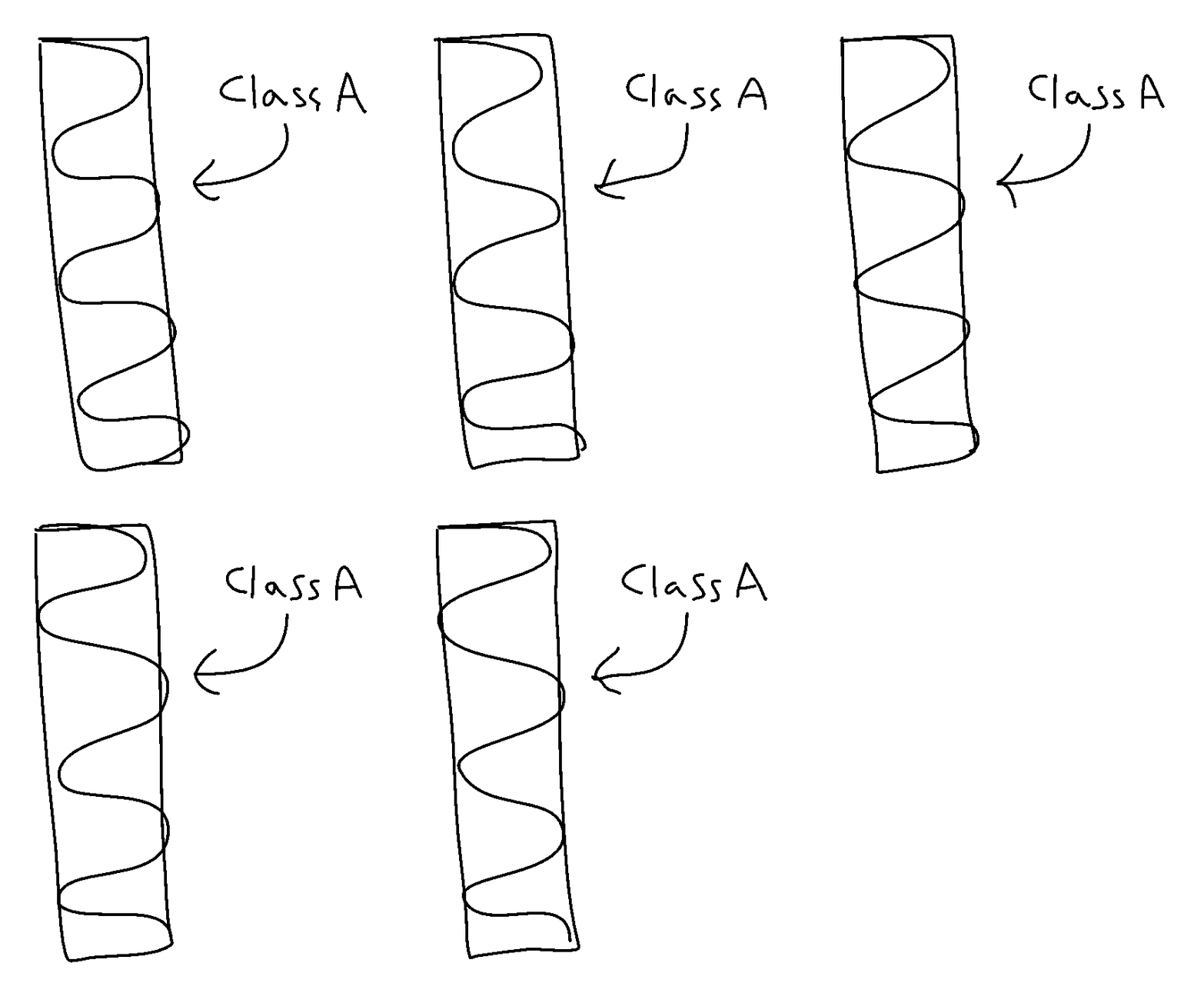
Absorption materials can be rated by classes according to ISO 11654. These ratings range from Class E til Class A, where Class A is the best. These ratings come from a curvefitting, where the absorption coefficient for each octave band from 250 Hz – 4000 Hz are fitted to determine the class.
The result from the curve fitting is given the name: weighted sound absorption coefficient and is denoted “αw”.
As an ekstra detail, αw can be given with shape indicator “L”, “M” and “H” (Low, Mid, and High).
Example: αw = 0,70(H)
The example above gives the weighted sound absorption coefficient and the shape indicator H, indicating that excess absorption occurs at the higher frequencies, 2000 Hz or 4000 Hz.
On our LinkedIn profile, we delve deeper into these concepts and provide practical tips on optimizing room acoustics, selecting appropriate materials, and implementing soundproofing strategies.
Whether you’re seeking advice on improving your current space or looking to design a new one, our IsoCal App will equip you with the knowledge to create harmonious environments that enhance both sound quality and human experience. Stay tuned for more educational content and expert insights!
Remember, understanding the principles of acoustics opens the door to a world of better sound. Let’s embark on this sonic journey together!