
Noise Barriers
Introduction: When it comes to combating noise pollution, noise barriers have emerged as effective tools to minimize the impact of unwanted sounds. These physical structures help shield communities, homes, and public spaces from excessive noise levels generated by highways, railways, and other sources. However, it is essential to understand the various factors that influence their effectiveness. In this segment, we will delve into the role of foliage and diffraction in the context of noise barriers, highlighting their effects and limitations.
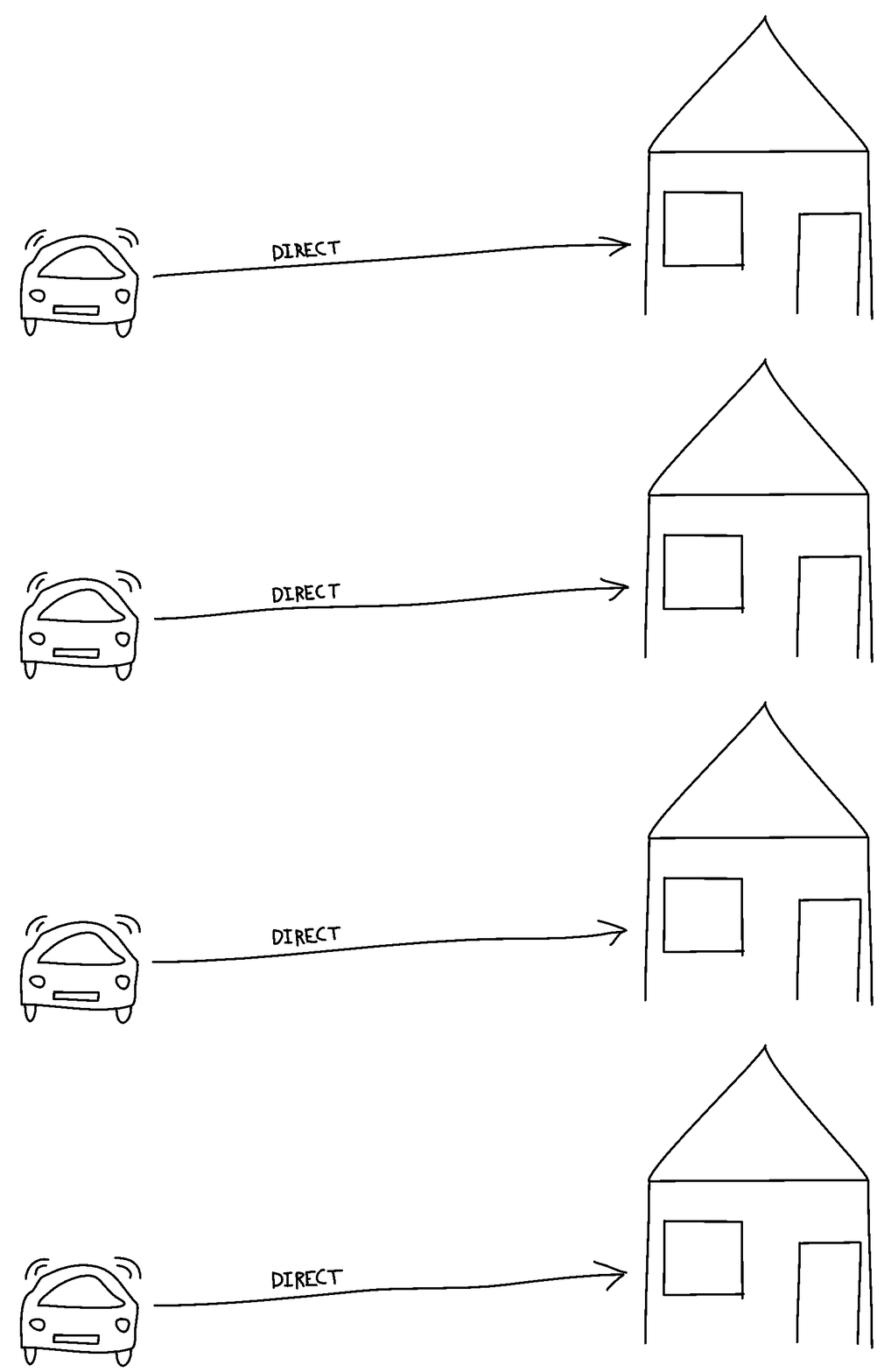
Noise sources such as traffic noise is an issue for alot of houseowners/renters, especially in urban environments and near highways. Alot can be done to reduce the noise, however not all solutions is a “one size fits all”.
The Role of Foliage:
One commonly held belief is that foliage, such as trees and shrubs, can significantly reduce noise levels by acting as natural sound absorbers. While it may be tempting to assume that lush greenery alone can alleviate noise pollution, the reality is more nuanced. Foliage does have some impact on noise reduction, primarily through the principle of “out of sight, out of mind.” Visual barriers, like trees and bushes, create a psychological perception of reduced noise by blocking the line of sight to the noise source. This psychological effect can create a sense of tranquility, making the noise less noticeable or bothersome. However, in terms of actual acoustic insulation, foliage alone has limited efficacy.
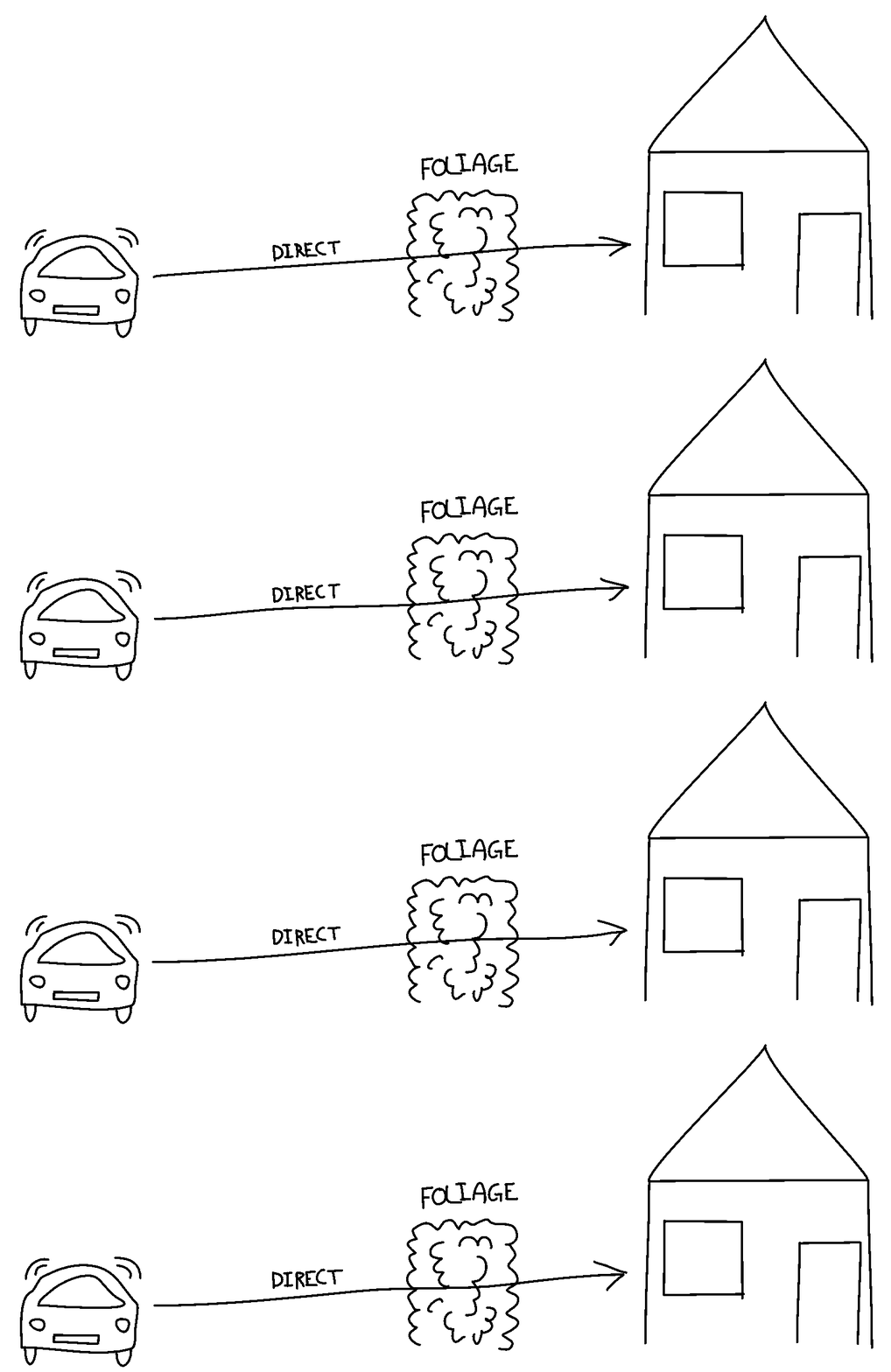
While it’s true that trees and shrubs lining our roads can create a visual barrier, leading to a perceived reduction in noise, the reality is that foliage alone is not a foolproof solution for noise mitigation.
The aesthetic appeal of lush greenery also contributes to a more pleasant environment. 🌿
Beyond the acoustic limitations, there are indeed benefits to integrating foliage alongside roadways. Trees and shrubs provide shade, improve air quality, and enhance biodiversity. They can also act as a physical barrier to minimize the dispersal of pollutants from vehicles.
The Limitations of Foliage:
Although foliage offers visual relief and can contribute to a serene environment, its acoustic benefits are modest. Foliage lacks the density and mass necessary to absorb or block sound effectively. Sound waves can penetrate through the leaves and branches, resulting in minimal reduction of noise levels. Furthermore, the effectiveness of foliage as a noise barrier diminishes with distance. As sound travels farther, it disperses, reducing the impact of foliage on noise reduction (The sound absorption of the ground effect rom soft forest ground, is of course another discussion). Therefore, while foliage can contribute to a pleasant aesthetic and psychological well-being, its role in noise reduction should not be overestimated.
The Impact of Diffraction From Noise Barriers:
Diffraction is an inherent characteristic of noise barriers that can have both positive and negative effects. Diffraction refers to the bending or spreading of sound waves as they encounter obstacles such as barriers. When noise encounters a solid barrier, it diffracts around the barrier’s edges, causing a portion of the sound to be bend around the edge.
However, diffraction is not without its downsides. While it can attenuate noise in certain directions, it can also lead to sound being redirected towards unintended areas. Sound waves that diffract around the barrier can create secondary noise patterns or bounce off nearby surfaces, potentially affecting neighboring communities or spaces not initially exposed to the noise source. This unintended redirection of noise can pose challenges when designing noise barrier solutions and requires careful consideration to mitigate any adverse effects.

Noise barriers, designed specifically to minimize the impact of traffic noise, act as formidable guardians.
However, we need to understand the different transmission paths to shed light on the overall efficiency.
Direct Transmission: Noise will penetrate the barrier itself, but this is where the barrier’s structure plays a crucial role. Constructed with specialized materials, such as dense concrete or sound-absorbing panels, noise barriers have the ability to absorb and dampen sound energy, significantly reducing its intensity. By impeding direct transmission, these barriers effectively block a substantial portion of road noise.
Diffraction and Bending: Sound waves possess a unique characteristic – they can diffract and bend around obstacles. This is a potential drawback of the barrier, and may play a role into the position of the barrier itself. As the noise encounter a barrier, it ‘bends’ around the edges, which in turn, can end up reaching the protected area anyway.
Reflection: Reflective surfaces are often perceived negatively due to the potential of sound waves bouncing back and forth, amplifying noise. However, noise barriers can be engineered with this factor in mind. The carefully calculated height, angle, and surface texture of the barrier facilitate sound reflection in a controlled manner. By directing the reflected noise away from sensitive receptors,
Conclusion:
In the pursuit of reducing noise pollution, noise barriers play a vital role in protecting communities and creating peaceful environments. While foliage may contribute to a sense of tranquility, its actual acoustic impact is limited. The “out of sight out of mind” effect it provides should not be mistaken for substantial noise reduction. On the other hand, a noise barrier, can offer significant noise reduction benefits by redirecting sound waves. However, diffraction must be carefully managed to avoid unintended consequences and the amplification of noise in unintended areas. By understanding these factors, noise barrier designs can be carefully optimized for noise control.