
Acoustic Ceiling with Diffuse Ventilation
Is Acoustic Ceiling with Diffuse ventilation GOOD or BAD?
Diffuse ceiling ventilation uses the open space between the ceiling slab and a suspended ceiling as a ‘plenum’ (fancy word for ‘air-storage’) to push fresh air through the porous suspended ceiling, which will act as an air diffuser.
A pretty neat concept that allows the mix between ventilation and acoustics.
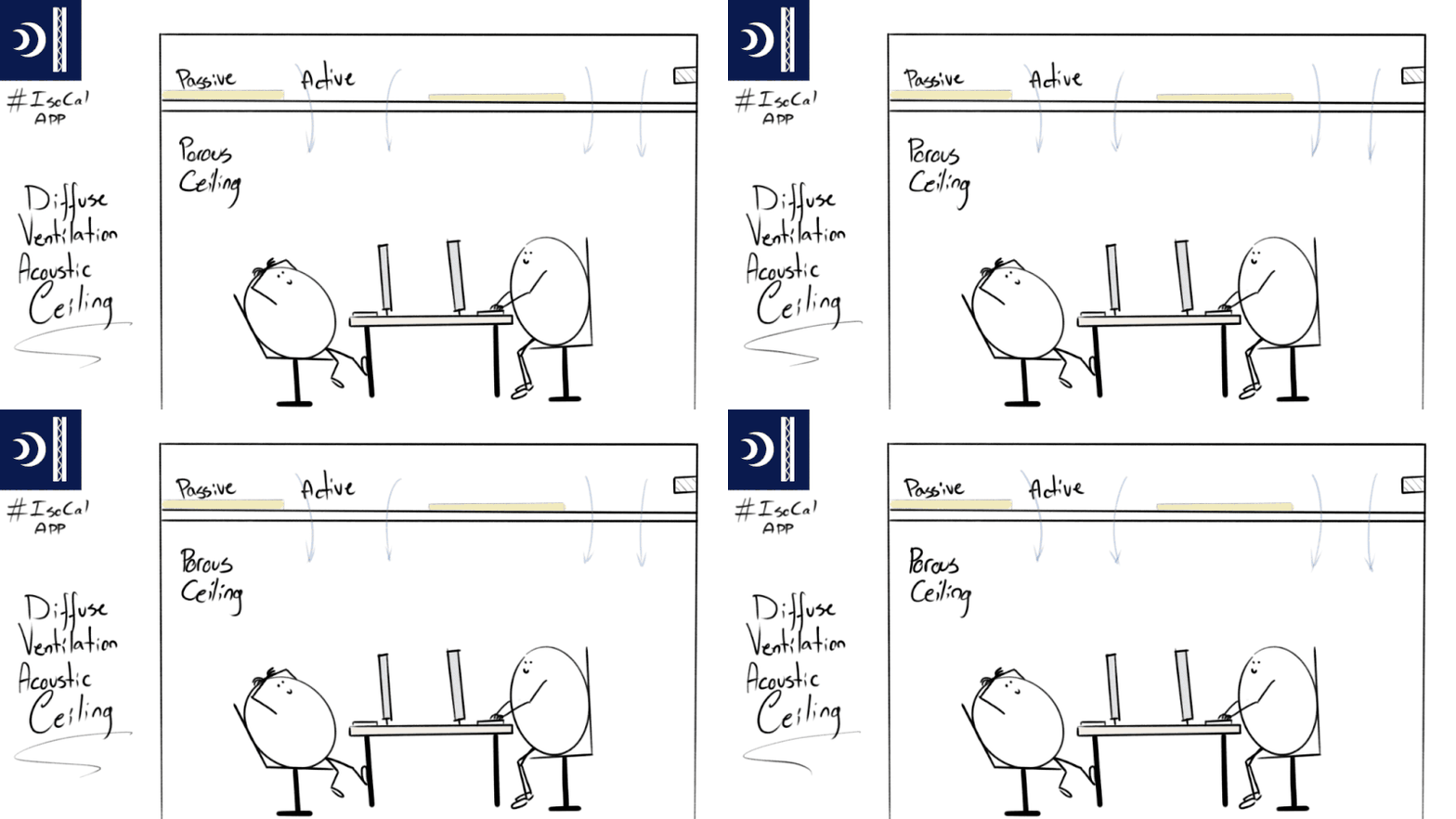
Upsides include saving cost, as it takes out installation of multiple ventilation outlets/inlets, ductwork in the ceiling and also typically allows for a significant drop in the pressure needed to move the air.
Downsides was diffuse ventilation ceiling is usually limited to smaller and simple volumes (often room height of less than 3m). It also limits the cavity of the plenum and the structure of the acoustic panels, as the porous material will have to have a flow resistivity that will allow the air to flow evenly. This all means limited design options for diffuse ventilation ceilings.
Furthermore, because some panels will have to be ‘active’ and without mineral wool on top, also means that a certain percentage of the ceiling area will have a lower absorption coefficient at the lower frequencies, which can be an issue.
With all this in mind, these diffuse ventilation ceilings can be a fantastic solution for both ventilation and acoustics.