
Impact Noise Measurement
Wanna know how to measure impact Sound pressure level?
One of the most important hardware for determining the impact Sound pressure level is the standardized tapping machine having 5 drop weights (each 500g) with a tapping frequency of 10 hz and a free Fall height of 40 mm.
In short the machine is placed in several positions In the excitation room and the Sound pressure level is measured In the recieving room and thereafter corrected for the equivalent absorption area In the recieving room, found by measuring the reverberation time.

The impact Sound pressure level is an important parameter In building Acoustics and very often found as a requirement In building regulation, where thresholds are given In order to minimize impact noise.
Impact Noise Single Number Rating
The weighted impact sound pressure level is derived with the help from a standardized curve In the frequency range 100 – 3150 Hz. The reference curve comes from the International Standard 717-2.
The reference curve is shifted up or Down on The measured impact Sound pressure level curve until the unfavourable deviations (deviations over the reference curve) is as large as possible but not exceeding the total of 32 dB.
A rough sketch is shown below with the general idea, the reference curve (shown In red Line) is shifted on the level curve (shown In Black Line) until the total deviations is as large as possible but not exceeding 32 dB. The deviations are shown In the red marked area.
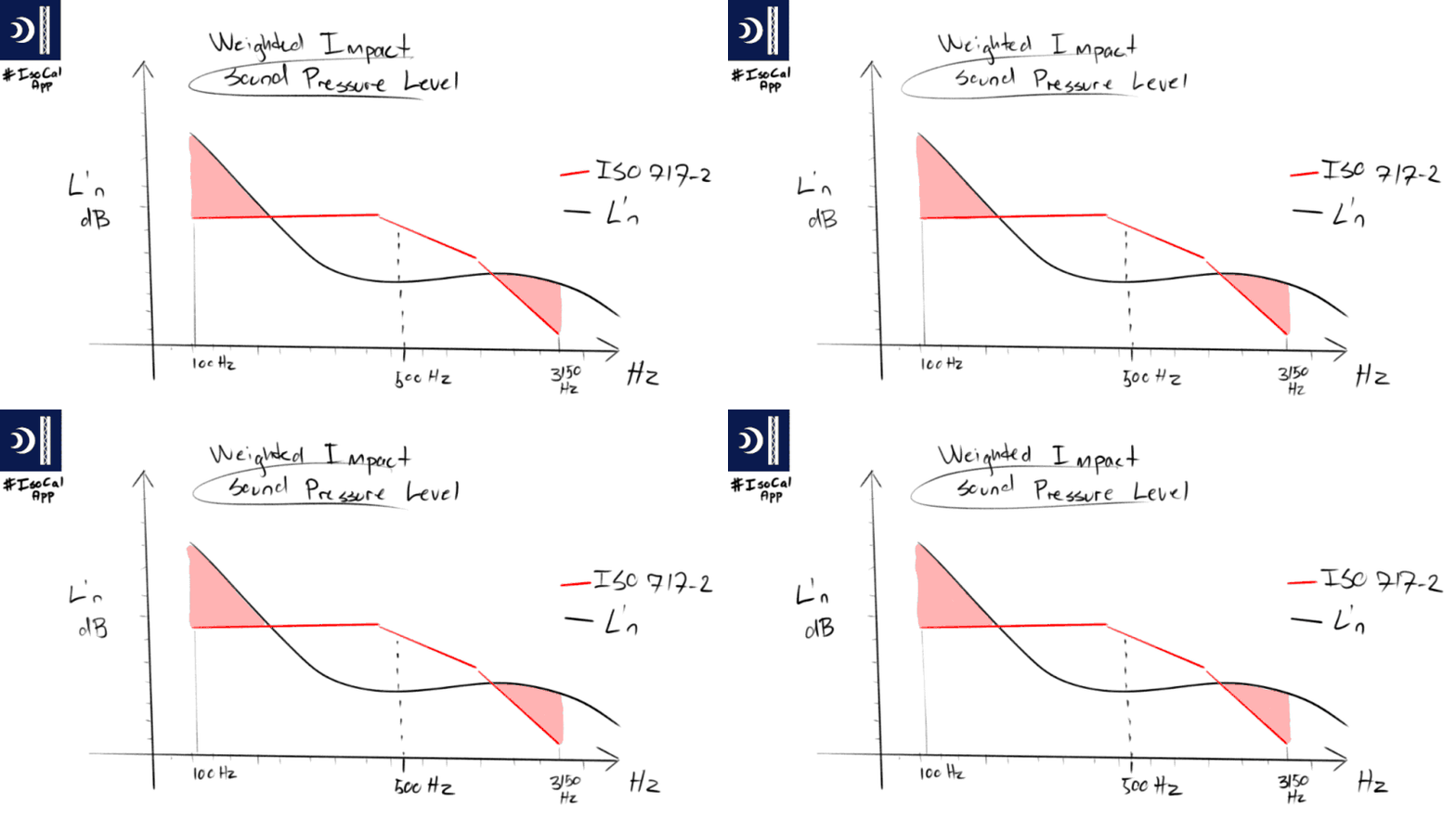
The value of the shifted reference curve at 500 Hz is taken as the single number rating. This single number rating is usually what building regulation Will refer to when setting limits.